Making MINT ARM easier to use every day
2023 | Case study / by Carmelo Bisignano, Senior digital product designer
Project information
- Industry
- Ad tech
- Duration
- 36 months, fixed scope
- Team
- 3 product owners, 5 UI/UX designers, 4 product managers, 4 business analysts, 45 developers
- My role
- Design system and its upkeep, Prototyping, UX data analysis
- Users
- Directors, Strategists, Digital leads, Planning and execution specialists, Technical account managers
- Tools
- Figma, Miro, Hotjar, Google Analytics, Confluence, Jira
Carmelo is a highly motivated and accountable team member who consistently delivers on tasks, even under tight deadlines. With outstanding lead UX skillset, he thoroughly investigate user needs to find the best solutions for new interfaces
Overview
MINT ARM (Advertising Resource Management) puts an advertiser's people, processes, workflows and data in one system.
Media teams use it to plan, buy, traffic and report on campaigns without jumping between tools.
The problem
We started with MINT's own analytics. At kick-off, 53% of users dropped out on the campaign settings page, 26% went elsewhere to get the job done, and only 21% found what they were looking for.
- 53%left at campaign settings
- 26%used other tools instead
- 21%found what they needed
When people couldn't find something, they opened a support ticket. Our goals, agreed with MINT's team, were to raise ARM's usage score by 50%, automate as much of the manual work as we could, and give the product a fresh look that was clearly MINT.
Product and brand
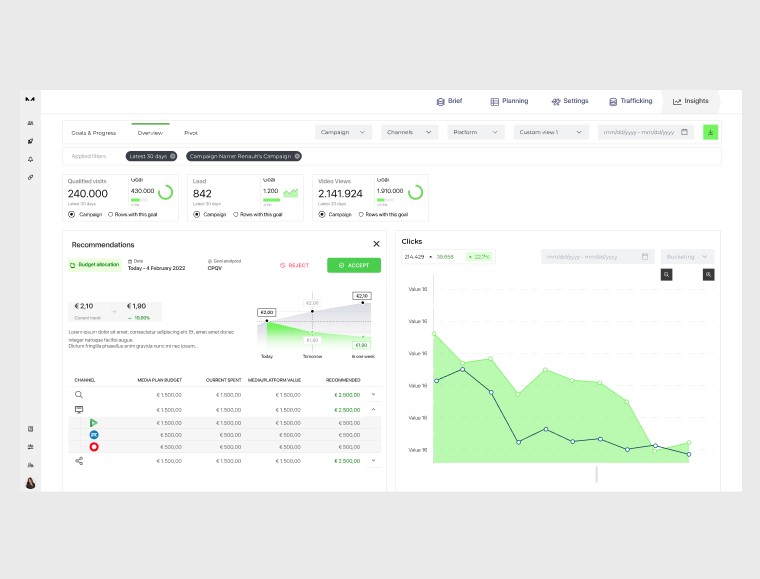
ARM exists so skilled media people can spend their time on strategy instead of admin. For that, it has to show the whole advertising process in real time, surface AI suggestions where they help, and feel approachable rather than technical.
I carried MINT's brand language into every component of the redesign. A consistent product is easier to trust, and easier to learn when a team runs an entire campaign in it, across internal and external processes.
Methods
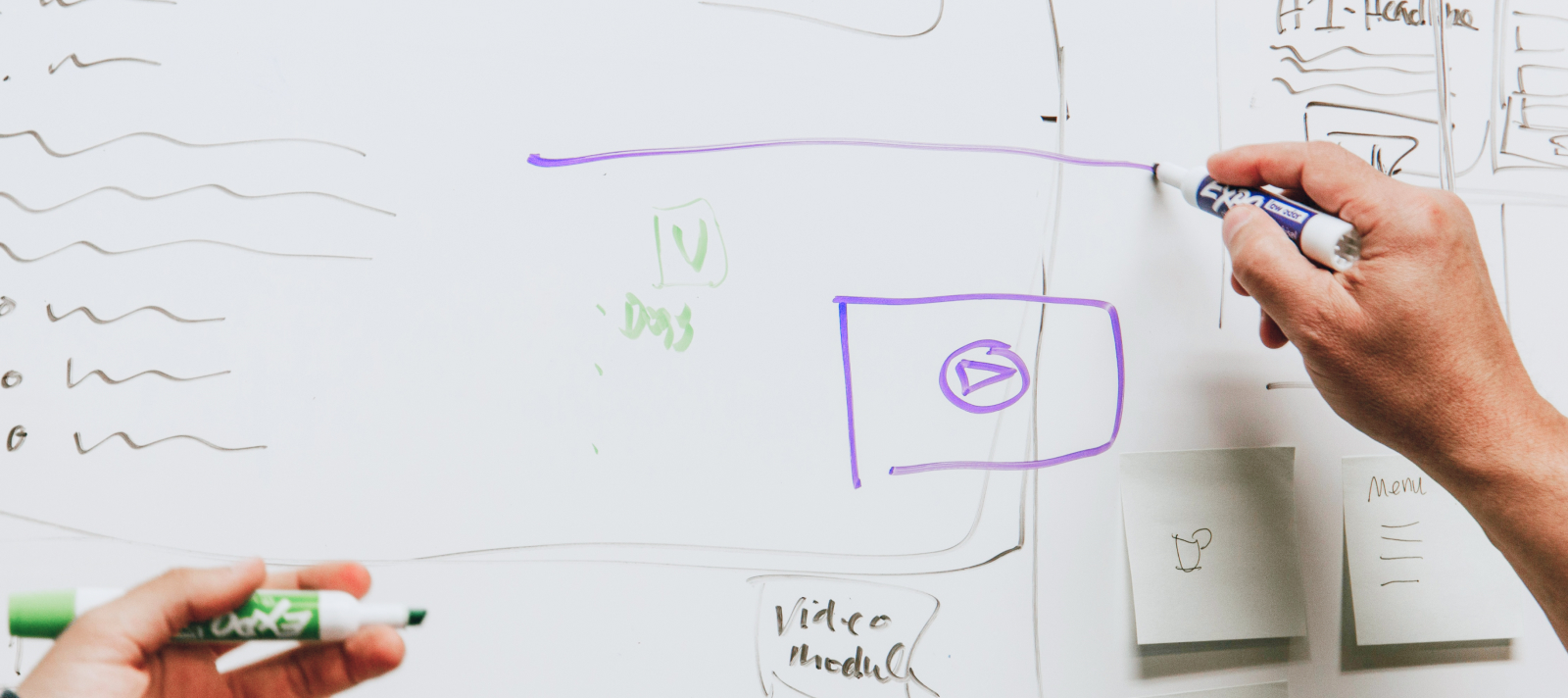
We sat inside MINT's marketing operations team to learn their needs, processes and pain points first-hand.
- Monthly workshops. With stakeholders, to write down business and design requirements: system maps, process flows, user scenarios.
- Observation. We watched, and joined in, client meetings, campaign planning and buying, campaign management and reporting.
- Interviews. One-to-one with digital marketers at every level, about what mattered to them and what got in the way.
- Prototype testing. A high-fidelity prototype tested with marketers to check the fixes actually worked.
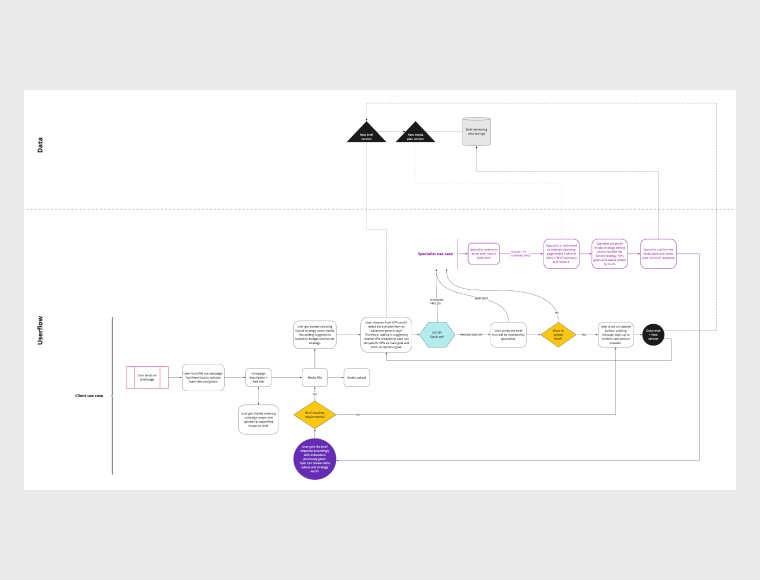
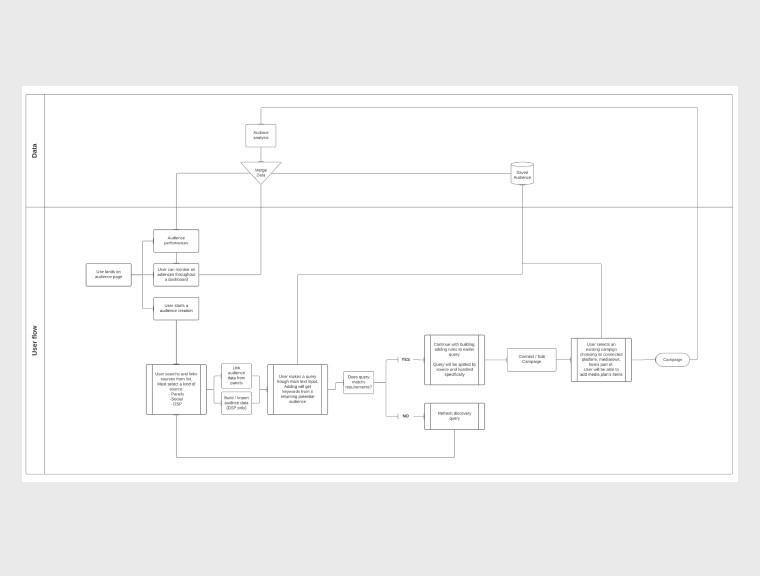
- Systems thinking. Mapping the business process helped us decide which parts of its complexity to take on first.
- Design for AI. Working out which data the AI features needed, and the context around each task: the user's state, setting, system and domain knowledge.
Solution
We started with the most painful, highest-priority problems and worked down the list.
Structure and layout
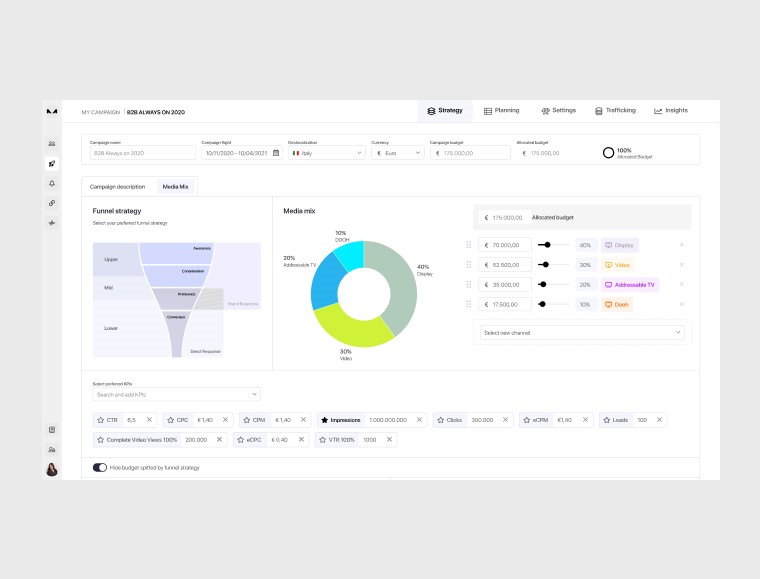
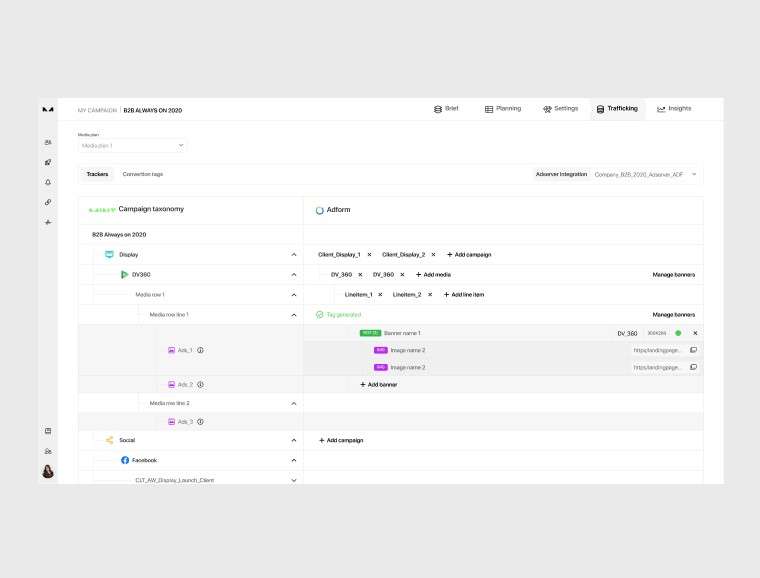
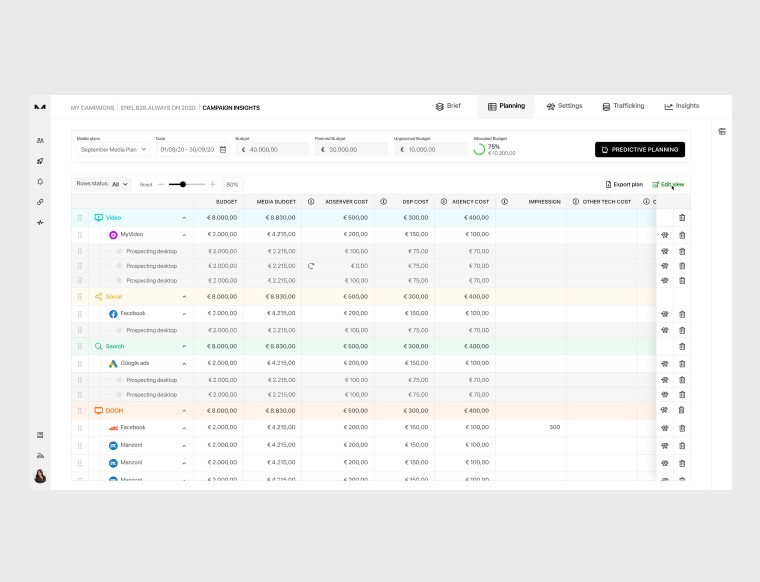
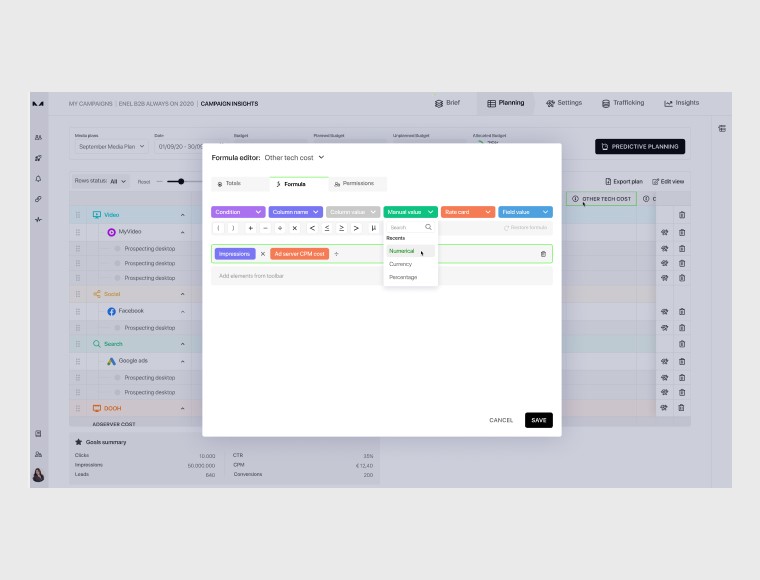
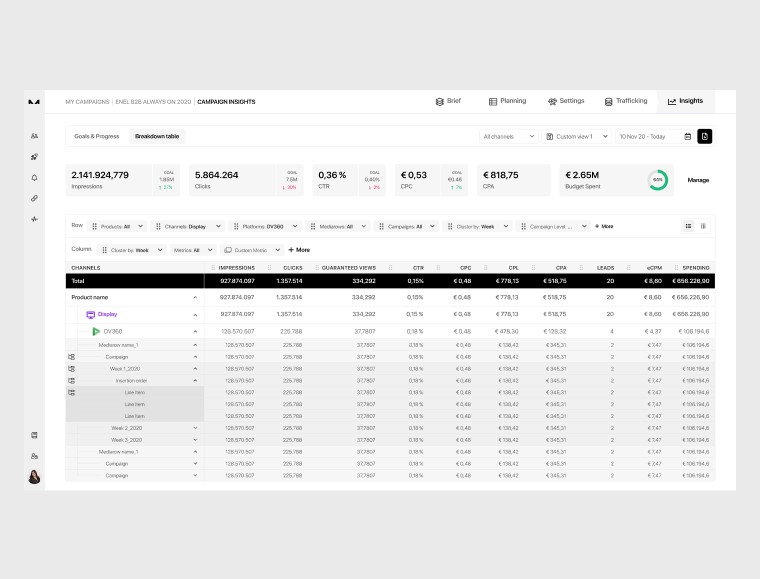
We rebuilt the page structure, grouped the main sections and set UX patterns and floorplans. Navigation inside each module got simpler, and every screen got responsive behaviour.
A visual language for sub-products
MINT extends ARM with sub-products. Their marks are built from simple geometric shapes, small pieces of the main brand, with clear rules on size and form. I wrote step-by-step instructions so MINT's team can create new ones themselves.
Design system
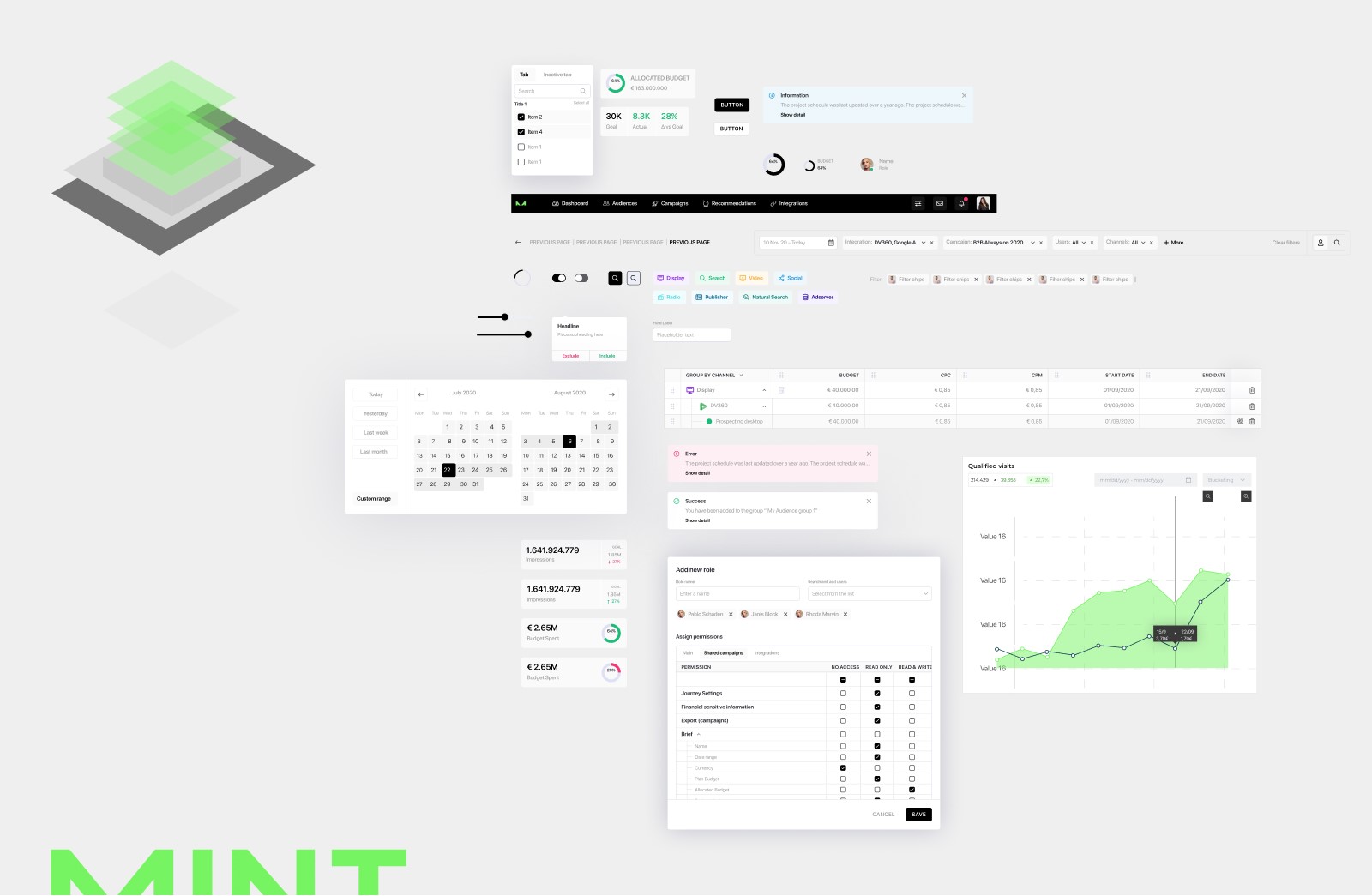
With shared visual foundations, MINT updated its guidelines and launched three new products. The team now runs the design system on its own, refining the style without breaking its principles.
Outcome
- +34%ARM usage and satisfaction
- −25%manual activity
- 4×content readability
Navigation and day-to-day ad operations both got easier. ARM usage and satisfaction rose by 34%, and the new layout made content four times more readable. Execution teams took on less overflow, got more automation, and gained AI insights, forecasts and suggestions to decide with.